The $44 Question: I Tested 9 Low-Cost Carfax Alternatives So You Don't Have To


If you follow Auto Pulse Journal, you know I spend an unhealthy amount of time digging into automotive data, vehicle logistics, and the secondary car market.
Whenever someone asks me how to inspect a used car from North America, my first recommendation is simple: check the vehicle history before buying it.
For decades, Carfax has been the best-known name in the vehicle-history business. Its brand is everywhere, and its integration with dealerships is hard to match.
But there is another question buyers should ask:
Do you really need to spend $44 or more for every vehicle you want to investigate?
If you're comparing four or five cars, the cost can quickly become $150–$200 before you've even made an offer.
So I decided to look at the cheaper alternatives.
I Tested 9 Lower-Cost Alternatives
For the comparison, I focused on services offering inexpensive vehicle-history reports. I looked at pricing, delivery speed, auction information and the type of information available in the final report.
Here is the quick comparison:
| Platform | Pricing | Turnaround | Direct Access |
|---|---|---|---|
| CheapVINReport | $3.99 | Instant (Web / PDF) | Visit CheapVINReport |
| CarfaxForSale | $4.00 | Instant (Web / PDF) | Visit CarfaxForSale |
| CarVins | $4.50 | 1–3 Minutes (Web / PDF) | Visit CarVins |
| VINInfoHub | $4.99 | Instant | Visit VINInfoHub |
| CheapCarfax.net | $5.99 | 10–30 Seconds (Email) | Visit CheapCarfax |
| CarfaxDeal | $7.00 | 1–5 Minutes (Email) | Visit CarfaxDeal |
| VinDecoderz | $8.50 | Instant | Visit VinDecoderz |
| VinAudit | $9.99 | Instant | Visit VinAudit |
| EpicVIN | $14.99 | Instant | Visit EpicVIN |
| Official Carfax | $44.99 | Instant | Visit Carfax |
Prices and features can change, so check the provider's current offer before purchasing.
What Actually Matters in a Vehicle History Report?
Price is only one part of the equation.
A cheap report isn't useful if it doesn't reveal the information that can change a buying decision.
For my comparison, I paid particular attention to four areas.
1. Title and Salvage History
Title brands can reveal major events in a vehicle's past, including salvage, rebuilt or other branded-title situations.
This is particularly important when buying vehicles that have been imported from another state or country. A vehicle can change jurisdictions during its lifetime, so looking at the title history as a whole is more useful than simply checking whether today's title is "clean."
2. Accident and Insurance Records
A report may contain information about collisions, insurance claims or damage.
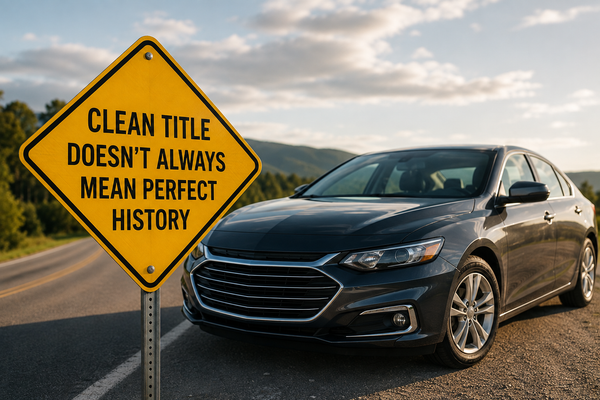
However, buyers shouldn't assume that a clean report means the vehicle has never been damaged. Not every accident is reported to every database.
That's why the history report should be treated as one part of the inspection process, not a replacement for a mechanical inspection.
3. Auction History and Photos
This was one of the most interesting parts of the comparison.
Text records might say something as simple as:
Front-end damage reported.
That doesn't tell you nearly as much as seeing photographs of the vehicle before it was repaired.
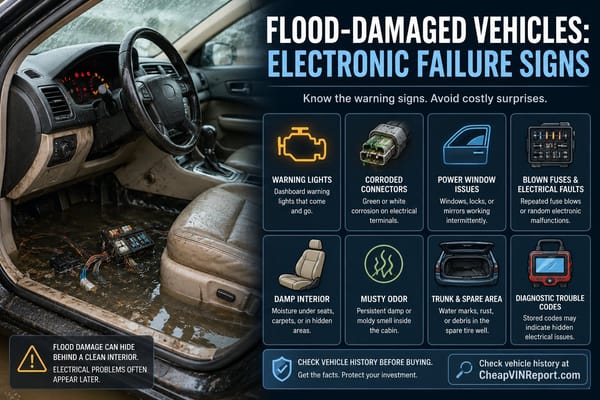
Auction photographs can sometimes reveal details that are difficult to understand from a text-only history: deployed airbags, broken suspension components, extensive body damage, flood exposure or repairs that were later hidden by cosmetic work.
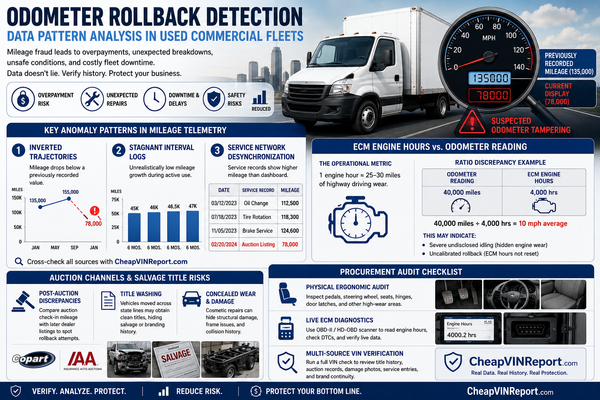
4. Odometer and Mileage Records
Mileage consistency is another important part of the investigation.
Look for chronological mileage records and pay attention to unexplained gaps or sudden changes.
A single mileage reading shouldn't automatically be treated as proof of fraud, but unusual patterns deserve further investigation.
What I Learned From Comparing the Services
The biggest lesson wasn't simply that some reports are cheaper.
It was that the value of a vehicle-history report depends heavily on what information is available for that particular VIN.
Some vehicles have extensive records. Others have surprisingly little.
That means two different reports can appear very different even when you're checking the same vehicle.
A report might contain:
- title records
- mileage readings
- accident information
- insurance records
- auction history
- theft records
- lien information
- registration events
- service or inspection records
But availability depends on the vehicle and the underlying data sources.
Is the $44 Carfax Report Worth It?
Sometimes, yes.
If you're buying an expensive vehicle from a dealer and want the most widely recognized report in the U.S. market, paying for a Carfax report can make sense.
But if you're screening multiple vehicles before deciding which one is worth inspecting, spending $44 on every VIN can become expensive very quickly.
For that initial screening stage, lower-cost reports can be useful.
For example, instead of spending nearly $180 checking four cars at $44.99 each, a buyer could use inexpensive reports to narrow the list down to one or two serious candidates.
Then spend more money on the vehicle that actually looks promising.
My Practical Strategy
If I were shopping for a used vehicle today, I wouldn't rely on a single source.
I'd use a simple three-step process:
Step 1 — Screen the VIN
Start with an inexpensive history report and look for obvious red flags.
Step 2 — Investigate the past
If auction records or damage information appear, look closely at the available photographs and dates.
Step 3 — Inspect the actual vehicle
A history report can't tell you everything.
Before purchasing, check the vehicle physically or have an independent mechanic inspect it.
The Bottom Line
The biggest mistake a used-car buyer can make isn't spending $4 instead of $44.
It's buying a vehicle without checking its history at all.
A low-cost VIN report can be a useful first filter, especially when you're comparing several cars.
The important thing is to understand what the report actually contains, recognize its limitations, and use it together with an inspection and other available records.
For high-volume buyers, importers, dealers and ordinary consumers shopping for their next daily driver, inexpensive VIN checks can make the research stage considerably more affordable.
And that's the real answer to the $44 question:
You don't necessarily need to spend $44 every time you want to investigate a VIN.
Sometimes, spending a few dollars on the right information before you make an offer is the smarter investment.