5 Signs a Car May Be Hiding Serious Problems: A Complete Buyer's Guide

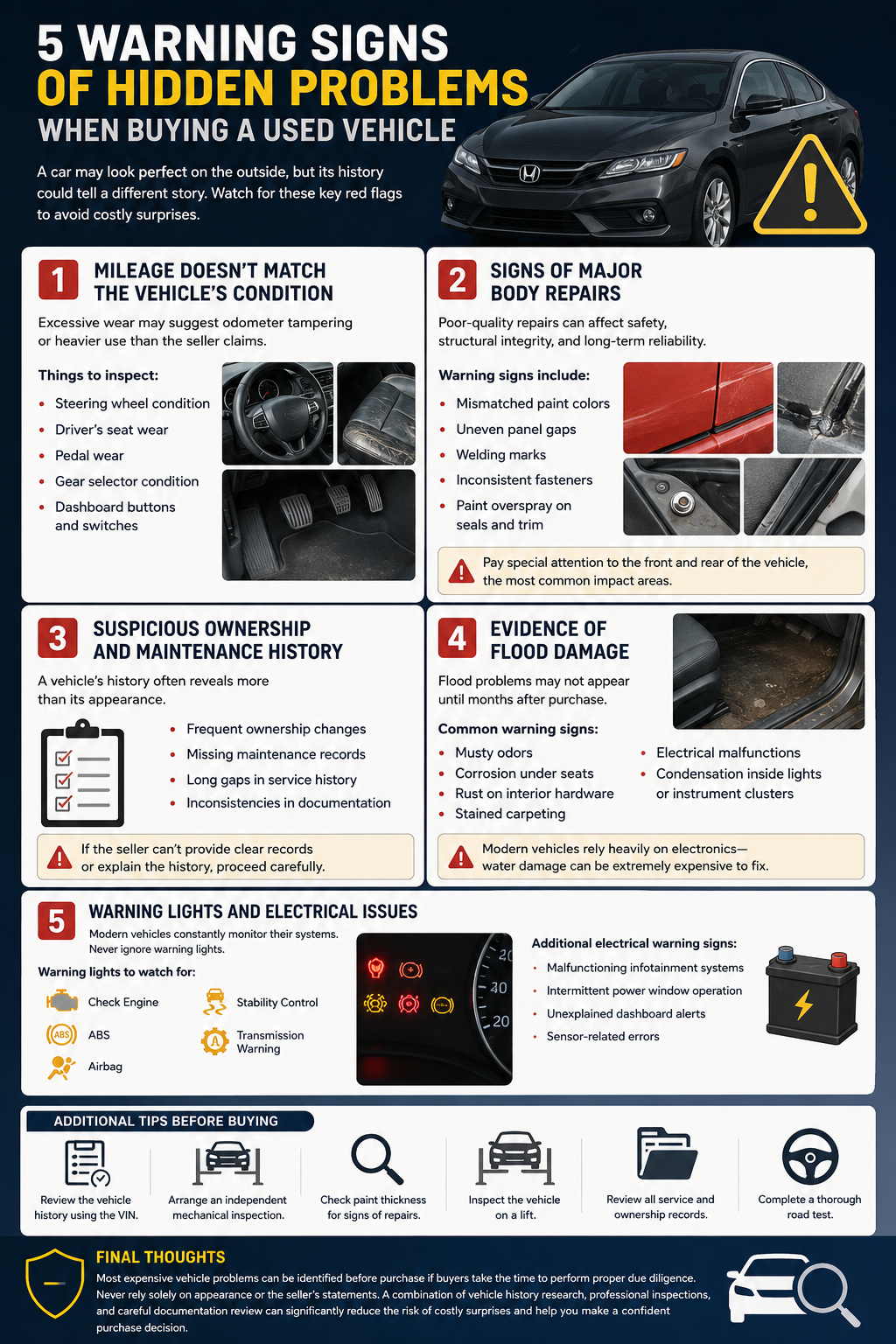
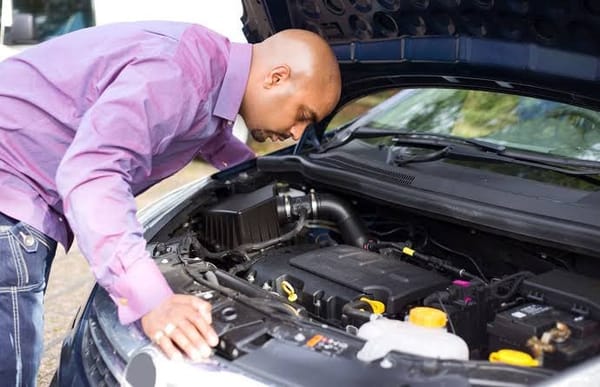
Buying a used vehicle can be a smart financial decision, but it also comes with risks. Many cars look excellent in photos and even during an in-person inspection, yet their history may include major accidents, flood damage, mileage fraud, or expensive mechanical issues.
Experienced buyers understand that a shiny exterior does not always reflect a vehicle's true condition. Here are five important warning signs that may indicate hidden problems.
1. Mileage Doesn't Match the Vehicle's Condition
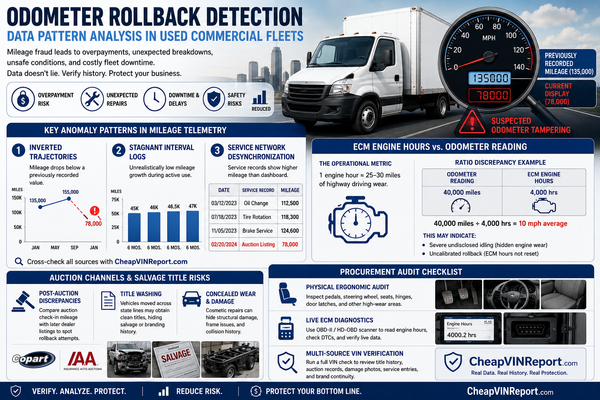
One of the most common red flags is a mismatch between the reported mileage and the overall wear of the vehicle.
For example, a car showing 50,000 miles should not have heavily worn seats, a polished steering wheel, or severely worn pedals.
Things to inspect:
- steering wheel condition;
- driver's seat wear;
- pedal wear;
- gear selector condition;
- dashboard buttons and switches.
Excessive wear may suggest odometer tampering or significantly heavier use than the seller claims.
2. Signs of Major Body Repairs
Many accident-damaged vehicles are repaired and returned to the market. Repair work itself is not necessarily a problem, but poor-quality repairs can create long-term issues.
Warning signs include:
- mismatched paint colors;
- uneven panel gaps;
- welding marks;
- inconsistent fasteners;
- paint overspray on seals and trim.
Pay particular attention to the front and rear sections of the vehicle, as these areas are commonly involved in collisions.
Poor repairs may affect structural integrity, safety, and long-term reliability.
3. Suspicious Ownership and Maintenance History
A vehicle's history often reveals more than its appearance.
Potential concerns include:
- frequent ownership changes;
- missing maintenance records;
- long gaps in service history;
- inconsistencies in documentation.
If the seller cannot provide clear records or explain the vehicle's history, buyers should proceed carefully.
Well-documented vehicles often command higher prices but generally involve lower ownership risk.
4. Evidence of Flood Damage
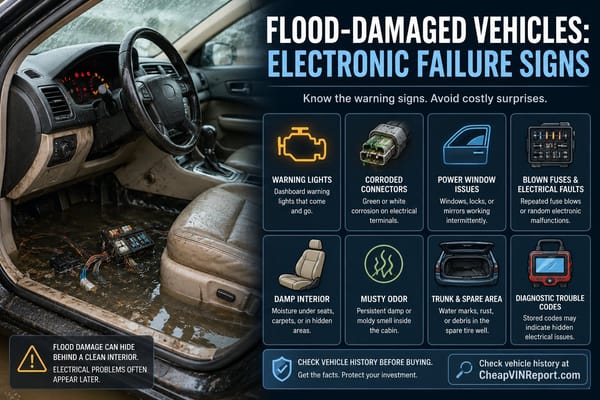
Thousands of flood-damaged vehicles enter the used car market every year.
The challenge is that flood-related problems may not become obvious until months after purchase.
Common warning signs:
- musty odors;
- corrosion under seats;
- rust on interior hardware;
- stained carpeting;
- electrical malfunctions;
- condensation inside lights or instrument clusters.
Modern vehicles rely heavily on electronic control modules, making water damage particularly expensive to repair.
5. Warning Lights and Electrical Issues
Modern vehicles constantly monitor their systems through onboard diagnostics.
Warning lights that should never be ignored include:
- Check Engine;
- ABS;
- Airbag;
- Stability Control;
- Transmission Warnings.
Some sellers clear diagnostic codes before listing a vehicle for sale. For this reason, a professional diagnostic scan is highly recommended.
Additional electrical warning signs include:
- malfunctioning infotainment systems;
- intermittent power window operation;
- unexplained dashboard alerts;
- sensor-related errors.
Additional Tips Before Buying
Even when a vehicle appears to be in excellent condition, buyers should:
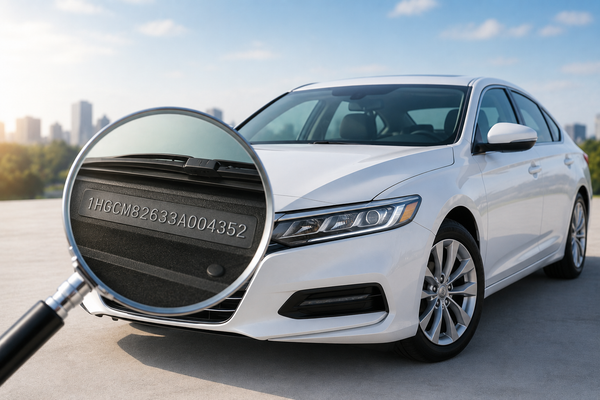
- Review the vehicle history using the VIN.
- Arrange an independent mechanical inspection.
- Check paint thickness for signs of repairs.
- Inspect the vehicle on a lift.
- Review all service and ownership records.
- Complete a thorough road test.
Final Thoughts
Most expensive vehicle problems can be identified before purchase if buyers take the time to perform proper due diligence. Never rely solely on appearance or the seller's statements. A combination of vehicle history research, professional inspections, and careful documentation review can significantly reduce the risk of costly surprises and help you make a confident purchase decision.