How to Choose the Right Car Make and Model: A Complete Buyer's Guide

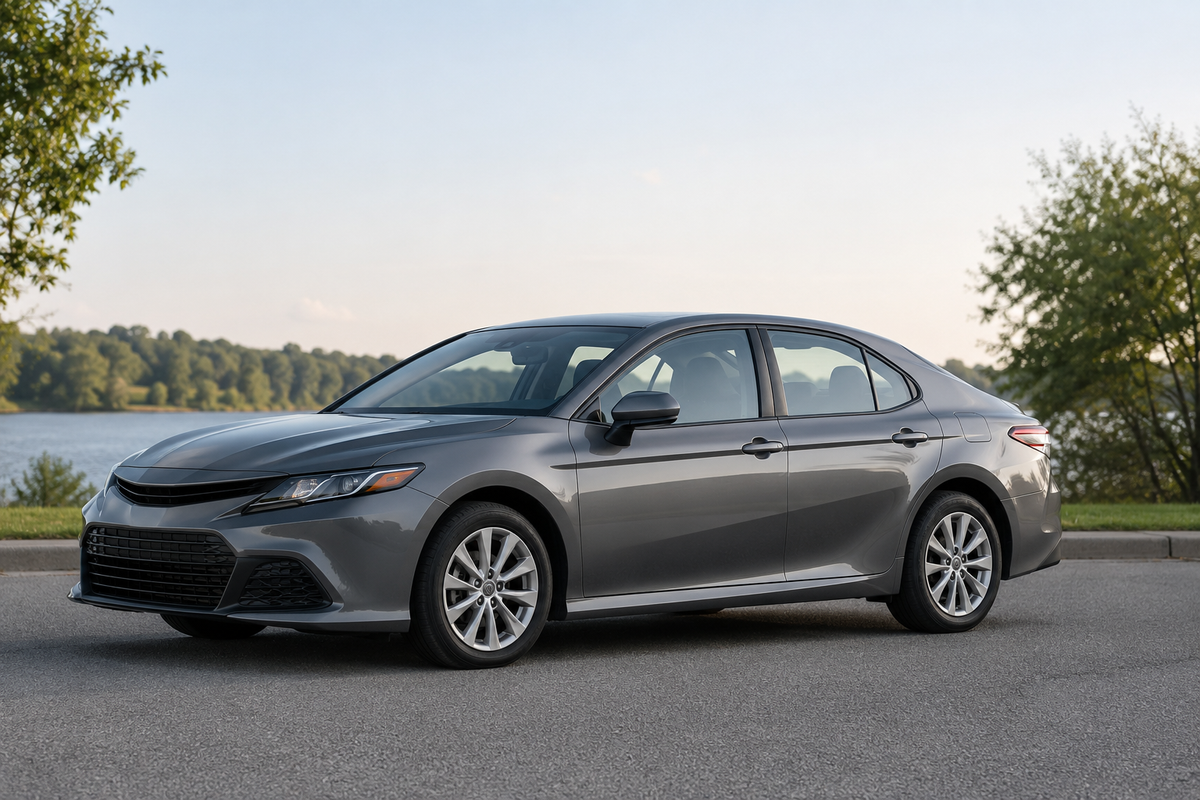
Buying a car is one of the biggest financial decisions most people make. Yet many buyers begin their search by browsing listings, looking at attractive photos, or listening to recommendations from friends. As a result, they often end up with a vehicle that is too expensive to maintain, impractical for daily use, or simply not suited to their lifestyle.
Choosing the right car starts long before you compare prices. The first step is understanding your needs and selecting the right type of vehicle before focusing on a specific make and model.
1. Understand How You Will Use the Vehicle
Before researching brands and models, ask yourself a few important questions:
- Will you mostly drive in the city or on highways?
- How many passengers will you regularly carry?
- Do you need a large cargo area?
- Will you take frequent road trips?
- Do you need all-wheel drive?
- How many miles do you expect to drive each year?
A compact sedan or hatchback may be ideal for commuting and city driving, while families often benefit from the additional space and versatility of an SUV or crossover. Drivers who regularly encounter rough roads or harsh weather conditions may prioritize ground clearance and traction.
2. Determine Your Total Ownership Budget
One of the most common mistakes car buyers make is focusing only on the purchase price.
The true cost of ownership includes:
- Fuel expenses
- Insurance premiums
- Routine maintenance
- Repairs
- Registration fees
- Tires and consumables
- Depreciation
A vehicle that appears affordable at first may become significantly more expensive over time due to maintenance and repair costs.
For example, an older luxury vehicle may sell for a surprisingly low price on the used market, but replacement parts and labor costs can quickly exceed expectations.
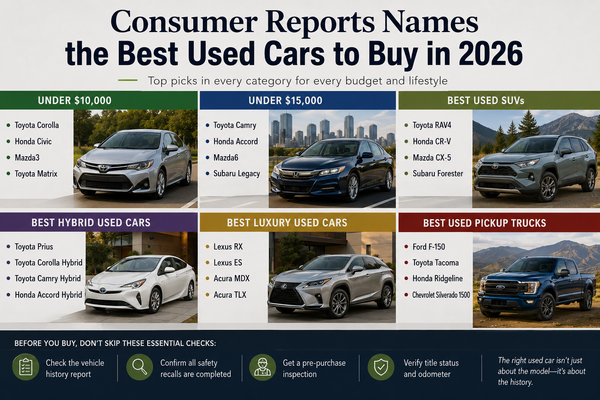
3. Research Reliability Carefully
Reliability can vary significantly not only between brands but also between specific models and generations.
A vehicle with an excellent reputation overall may still have certain years that are known for transmission issues, engine failures, or electrical problems.
Before making a decision, research:
- Owner reviews
- Common mechanical issues
- Maintenance costs
- Recall history
- Long-term reliability ratings
Pay special attention to vehicles equipped with turbocharged engines, complex hybrid systems, or advanced transmission designs, as repair costs may be higher.
4. Choose the Right Body Style
Different body styles serve different purposes.
Sedan
Advantages:
- Comfortable highway driving
- Better fuel economy
- Smooth handling
Disadvantages:
- Limited cargo space
Hatchback
Advantages:
- Easy parking
- Practical cargo area
- Efficient use of space
Disadvantages:
- Smaller passenger area compared to larger vehicles
Wagon
Advantages:
- Excellent cargo capacity
- Family-friendly practicality
Disadvantages:
- Less popular in some markets
SUV or Crossover
Advantages:
- Higher seating position
- Increased ground clearance
- Greater versatility
Disadvantages:
- Higher fuel consumption
- More expensive purchase price
5. Prioritize Safety
Modern vehicles offer a wide range of safety features that can significantly reduce the risk of accidents and injuries.
Look for:
- Multiple airbags
- Electronic stability control
- Anti-lock braking systems (ABS)
- Blind-spot monitoring
- Automatic emergency braking
- Adaptive cruise control
- Lane-keeping assistance
Safety ratings from independent crash-testing organizations can also provide valuable insight when comparing models.
6. Consider Fuel Economy
Fuel costs can have a major impact on long-term ownership expenses.
When comparing vehicles, evaluate:
- Real-world fuel economy
- Fuel type requirements
- Hybrid options
- Electric vehicle alternatives
Drivers with long daily commutes may save substantial amounts by choosing a fuel-efficient vehicle.
7. Compare Several Models
Avoid becoming emotionally attached to a single vehicle too early in the process.
Create a shortlist of three to five models and compare them based on:
- Purchase price
- Reliability
- Maintenance costs
- Fuel economy
- Safety ratings
- Interior space
- Resale value
This approach often reveals options that offer better value than your original choice.
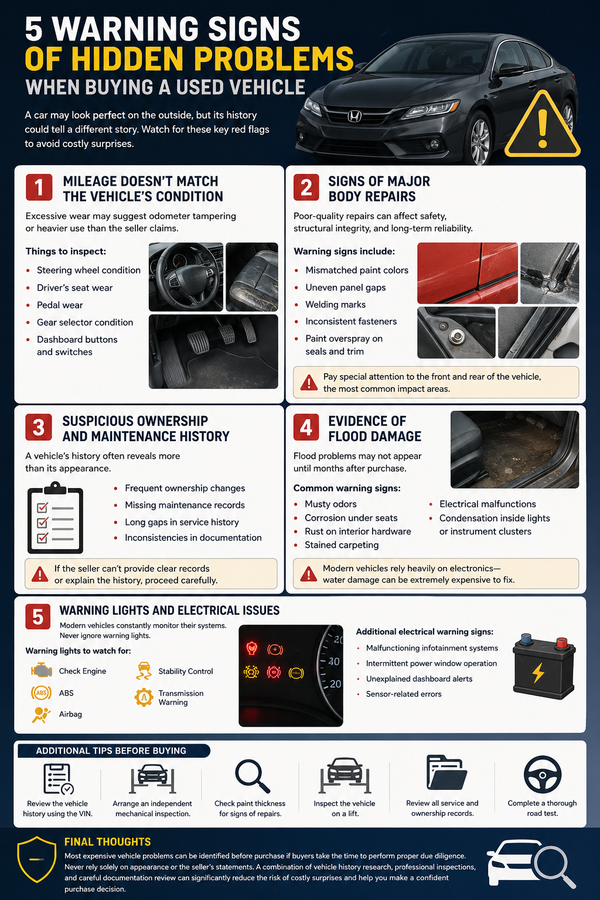
8. Check Vehicle History When Buying Used
Even the most reliable car can become a poor investment if it has a problematic history.
Before purchasing a used vehicle, verify:
- Ownership history
- Accident records
- Title status
- Odometer consistency
- Service history
- Insurance claims
- Auction records
A vehicle's history can reveal issues that are impossible to detect during a brief test drive.
9. Get an Independent Inspection
Never rely solely on the seller's description.
A professional pre-purchase inspection can uncover:
- Hidden accident damage
- Engine problems
- Transmission issues
- Electrical faults
- Signs of poor-quality repairs
The cost of an inspection is usually small compared to the potential expense of major repairs after purchase.
Final Thoughts
The best car is not necessarily the newest, most expensive, or most popular model. The right vehicle is the one that fits your lifestyle, budget, and long-term ownership expectations.
Taking the time to research different makes and models, compare ownership costs, and carefully inspect a vehicle before purchase can help you avoid costly mistakes and make a confident buying decision.
A well-informed buyer is far more likely to enjoy their vehicle for years to come while avoiding many of the common problems that affect used car ownership.