When Is It Time to Let Go of Your Car? 10 Signs That Repairs No Longer Make Sense

Many of us become attached to our cars. We remember the first road trip, family vacations, and even the funny stories that came with them. But there comes a point when keeping a car on the road costs more than it's worth.
So how do you know when it's time to stop repairing and start looking for a replacement?
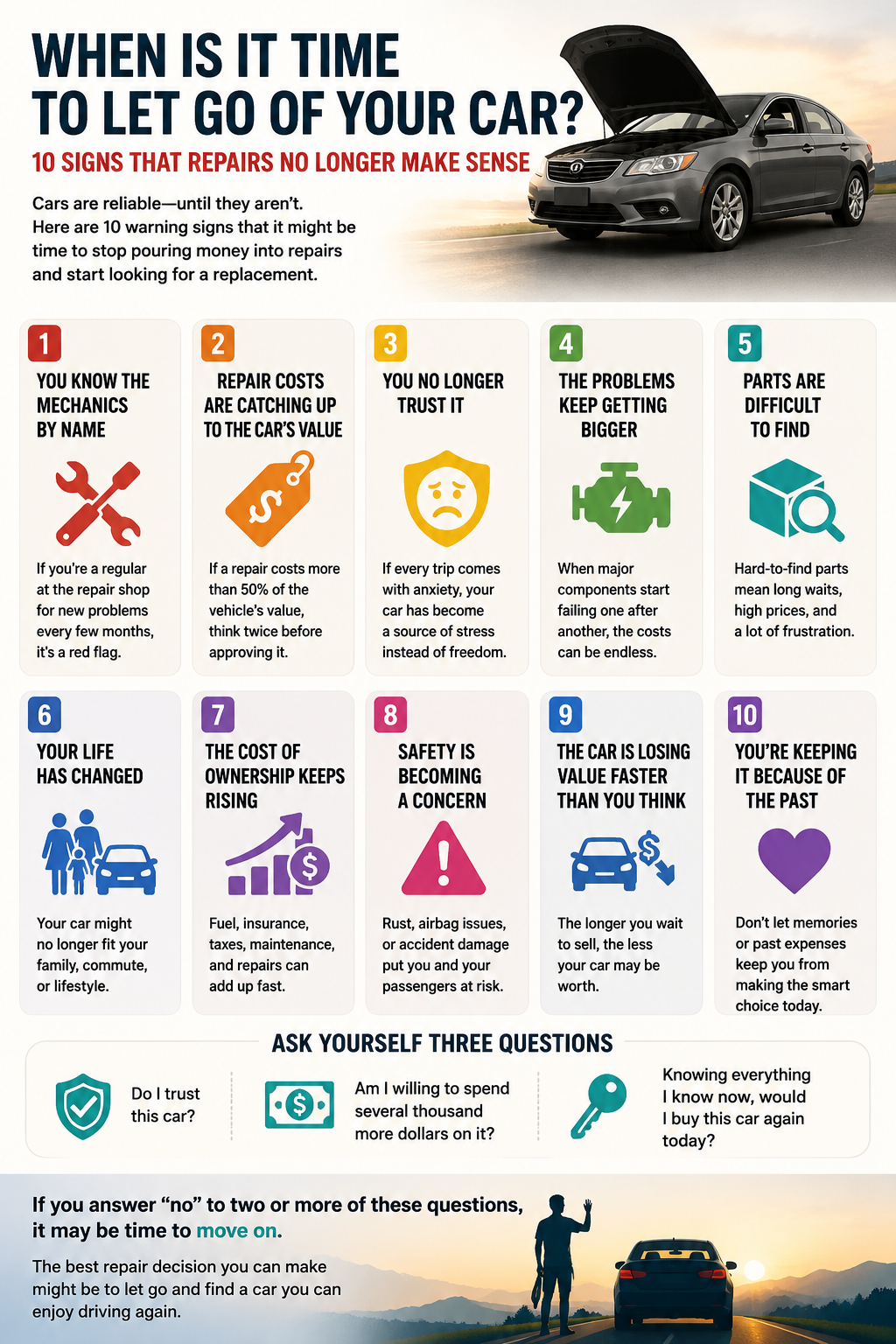
1. You Know the Mechanics by Name
There's a difference between routine maintenance and becoming a regular at the repair shop.
If your car seems to need attention every few months for a new issue, it's worth asking whether the cycle will ever end.
2. Repair Costs Are Catching Up to the Car's Value
A common rule of thumb is this: if a repair costs more than 50% of the vehicle's market value, think carefully before approving it.
Spending $3,000 to fix a car worth $5,000 may only make sense if you're confident it will remain reliable afterward.
3. You No Longer Trust It
This may be the biggest warning sign of all.
If every long drive begins with, "I hope nothing breaks this time," your car has become a source of stress instead of convenience.
A vehicle should give you freedom—not anxiety.
4. The Problems Keep Getting Bigger
It starts with brakes and a battery.
Then it's the alternator and radiator.
Now the mechanic is talking about a transmission rebuild, engine work, or expensive electrical repairs.
When major components begin failing one after another, the costs can become endless.
5. Parts Are Difficult to Find
Owners of older or less common vehicles know this feeling well.
If you're waiting weeks for replacement parts—or paying a small fortune to get them—you have to ask whether it's still practical to keep the car.
6. Your Life Has Changed
Sometimes the issue isn't the car itself.
Maybe your compact sedan no longer fits a growing family. Or perhaps that large SUV doesn't make sense now that you live in the city.
A car that once suited your lifestyle may no longer meet your needs.
7. The Cost of Ownership Keeps Rising
Fuel, insurance, taxes, maintenance, and unexpected repairs all add up.
In some cases, a newer vehicle with a monthly payment may actually cost less overall than an older car that constantly drains your wallet.
8. Safety Is Becoming a Concern
Surface rust is one thing.
Structural rust affecting the frame, suspension mounts, or other critical components is another matter entirely.
The same goes for malfunctioning seat belts, airbag issues, or unresolved accident damage.
When safety becomes questionable, emotions should take a back seat.
9. The Car Is Losing Value Faster Than You Think
The longer you hold onto a vehicle with mounting problems, the less it may be worth.
Sometimes it's better to sell it while it's still running and presentable rather than waiting until it requires a tow truck.
10. You're Keeping It Because of What You've Already Spent
This is often the hardest truth to accept.
People continue pouring money into cars because they've already invested so much in repairs and memories.
But money spent in the past is gone. The decision should be based on future costs, not past expenses.
Three Questions to Ask Yourself
Before approving the next expensive repair, ask yourself:
- Do I trust this car?
- Am I willing to spend several thousand more dollars on it?
- Knowing everything I know now, would I buy this car again today?
If you answer "no" to two or more of these questions, it may be time to move on.
That doesn't mean old cars are bad. Many vehicles with 150,000 or even 200,000 miles continue to provide years of dependable service. The key is recognizing the difference between normal maintenance and an endless battle against breakdowns.
Because sometimes the smartest repair decision isn't fixing the car.
It's letting it go and finding one you can enjoy driving again.